



Articolo del 27/02/2026
Minimally Invasive Hip Replacement: Who Is This Procedure For?
Patients often consider this procedure when they realize that hip pain and progressive joint limitation are making everyday activities impossible — tasks as simple as putting on socks and shoes, walking even short distances, or carrying out normal daily routines. In these cases, patients seek hip replacement to regain a normal quality of life.
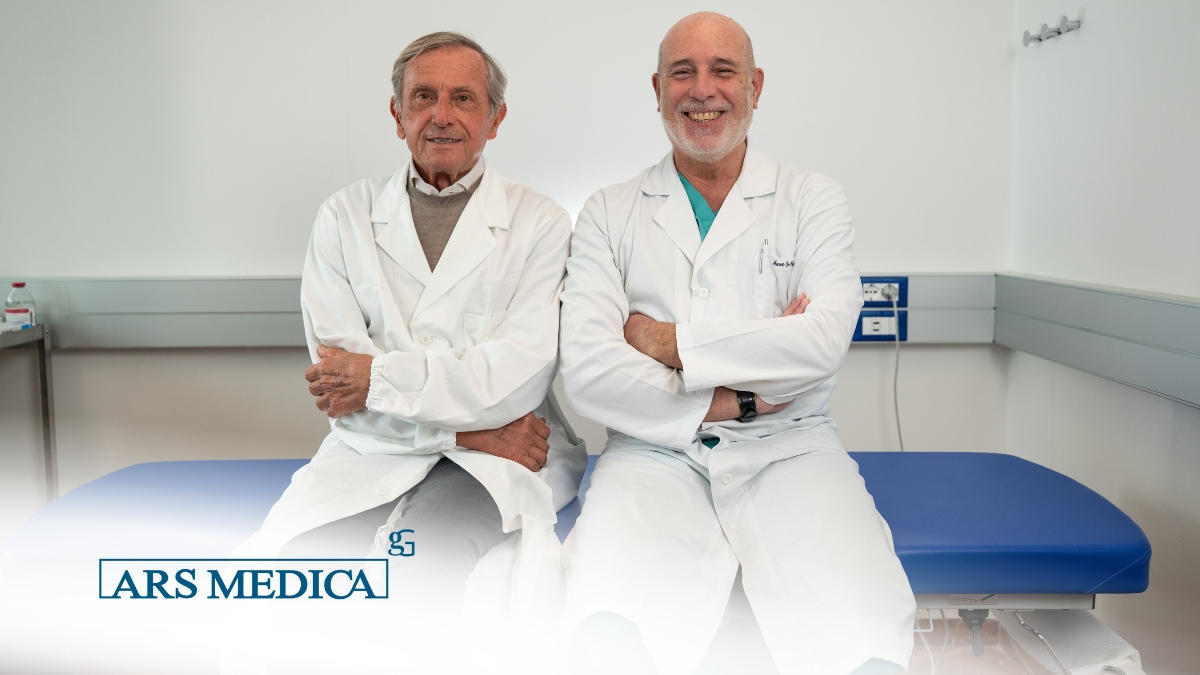
We discuss this with Prof. De Peppo and Prof. Cammarano, orthopedic and trauma specialists at Arsbiomedica Clinic, experts in hip prosthetic surgery using a less invasive anterior approach. They began performing minimally invasive hip surgery over 25 years ago and continue to lead programs aimed at improving patients’ quality of life through this technique.
What Does Hip Replacement Mean, and When Is It Necessary?
A hip replacement involves substituting the natural hip joint with an artificial implant, generally composed of two main components: one anchored in the pelvis and the other in the femur.
This procedure becomes necessary when the condition of the joint prevents patients from living normally, either due to pain or functional limitations that make the natural hip unmanageable.
Causes may include:
-
Degenerative conditions such as osteoarthritis
-
Traumatic injuries, such as femoral neck fractures
-
Congenital issues like developmental dysplasia of the hip
-
Pediatric-acquired conditions, such as Legg-Calvé-Perthes disease, which alter the shape and structure of the femoral head and neck, leading to joint imbalance and accelerated wear
Minimally invasive hip surgery is guided by a fundamental principle: to minimize surgical trauma while respecting surrounding tissues.
How Does Minimally Invasive Hip Replacement Differ from Traditional Techniques?
Minimally invasive hip surgery is designed to reduce surgical trauma and preserve as much tissue as possible. This is achieved through specific procedural strategies, including the choice of surgical approach and the use of specialized instruments.
At Arsbiomedica Clinic, we use the anterior minimally invasive approach. This is considered anatomical because it follows a natural intermuscular plane, requiring no cutting or detachment of muscles — tissues are gently separated instead of incised.
The benefits include:
-
Reduced blood loss
-
Less postoperative pain
-
Immediate stability of the implant, lowering the risk of dislocation
-
Complete preservation of the gluteus medius and rotator muscles, which are crucial for hip stability
This approach also allows:
-
The use of any type of prosthesis, tailored to the patient’s age and condition
-
A fast-track rehabilitation program, with physiotherapy starting the same day as surgery and patients walking and using stairs on the first postoperative day
-
Shorter hospital stays
Why Can This Procedure Be Life-Changing?
In short, minimally invasive hip replacement enables rapid, full recovery, allowing patients to return to work, social activities, and even their favorite sports.
After more than twenty years of experience with this technique, the key benefits observed in patients include:
-
Faster total functional recovery
-
Lower postoperative morbidity
-
High performance and durability of the prosthetic implant
-
Return to normal lifestyle, including competitive sports in some cases
-
Excellent cosmetic outcomes of the surgical wound
What Is the Greatest Reward for the Surgeons?
The greatest satisfaction, shared with the patient, comes from seeing them regain a completely normal life shortly after surgery, resume sports activities, and — in cases of bilateral osteoarthritis — request surgery on the opposite hip without hesitation.
For both surgeons and patients, minimally invasive hip replacement is not only a procedure to restore function but a way to bring back independence, mobility, and quality of life.